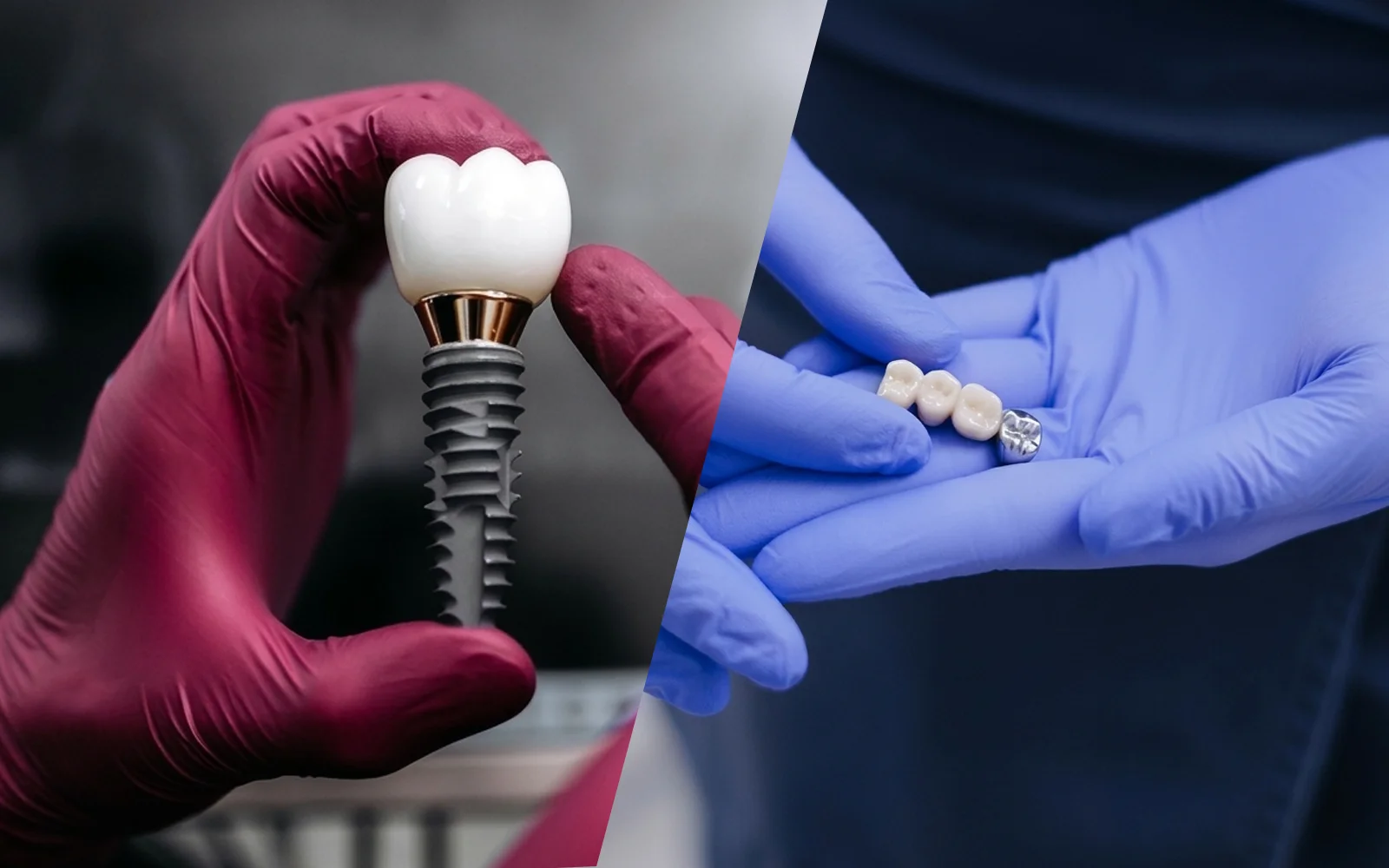
Dental Crowns vs. Bridges in Dubai: Differences, Benefits, Procedure, and Cost
Crowns protect an existing tooth; bridges replace missing teeth using neighbouring teeth. At Kayla in Al Warqa 1 we explain which restoration fits after a dental exam—fees confirmed in consultation.
If you are comparing dental crowns vs bridges in Dubai, you are usually choosing between protecting a damaged tooth and filling a gap left by a missing tooth. At Kayla Medical Center, on the ground floor of Noori Building in Al Warqa 1, we start with a dental examination—X-rays when needed—before we recommend a crown, a bridge, or another path. The clinic is licensed by the Dubai Health Authority, and you can speak Arabic or English.
Kayla offers crowns and bridges as one verified dental service. Crowns cover a weakened tooth; bridges replace missing teeth by relying on neighbouring teeth, as described on our service page. Session counts are explained after imaging. This article does not invent implant brands or package prices.
What you read here is general information from Kayla Medical Center. It is not a diagnosis, a fixed lifespan promise, or personal dental advice.
What is a dental crown?
A dental crown is a custom cap that covers an existing tooth after it has been prepared. Crowns help restore shape, strength, and appearance when a tooth is broken, heavily filled, worn, or treated with root canal therapy. The natural tooth remains underneath; the crown does not replace a missing tooth by itself.
What is a dental bridge?
A dental bridge is a fixed prosthesis that replaces one or more missing teeth. In the design Kayla describes, the bridge is supported by neighbouring teeth that are prepared to carry the restoration. Unlike a removable denture, a conventional bridge stays cemented in the mouth. Implant-supported bridges exist in dentistry generally; they are not claimed as a separate Kayla service on our crowns-and-bridges page—ask in consultation what we can provide for your gap.
Dental crowns vs. bridges: main differences
| Topic | Dental crown | Dental bridge |
|---|---|---|
| Primary purpose | Cover and protect an existing tooth. | Replace one or more missing teeth in a fixed span. |
| What sits underneath | Prepared natural tooth (or post/core when needed). | Pontic (false tooth) over the gap; abutments on neighbours. |
| Typical preparation | One tooth is shaped for the crown. | Supporting teeth on one or both sides of the gap are prepared. |
| Removability | Fixed once cemented. | Fixed once cemented (not a removable denture). |
When is a dental crown recommended?
Crowns are often discussed when a tooth is cracked, has a large filling, is badly worn, needs protection after root canal treatment, or needs a change in shape or colour that bonding or whitening cannot solve. Active gum disease or untreated decay usually need attention first. Suitability is clinical—not a self-checklist.
When is a dental bridge recommended?
Bridges are considered when one or more teeth are missing and neighbouring teeth are healthy enough to support a fixed span, and when a removable denture is not preferred. If abutments are weak, bite forces are high, or multiple gaps exist, another plan may fit better. Orthodontics or Hollywood smile veneers address different goals—alignment and cosmetic front-tooth design—not structural replacement of a missing tooth.
Types of dental crowns
Common educational categories include all-ceramic or porcelain crowns for a natural look, porcelain fused to metal, and full-metal crowns for strength on back teeth. Material choice depends on bite force, aesthetics, gum line, and tooth location. Kayla confirms materials after examination—we do not list lab brand names here.
Types of dental bridges
Traditional fixed bridges use crowns on abutments with a pontic in between. Cantilever designs use support on one side only in selected cases. Resin-bonded (Maryland) bridges may suit some front gaps with less preparation. Implant-supported designs replace roots with fixtures in the jaw—an option discussed in general dentistry, not presented here as a separate published Kayla bridge product. Your dentist explains which design your gap and abutments allow.
How are dental crowns and bridges performed?
After consultation and any needed gum or decay treatment, teeth are prepared, impressions or digital scans are taken, and a temporary restoration may protect the teeth while the lab works. At a later visit the final crown or bridge is tried in, adjusted for bite and colour, and cemented. Kayla explains how many visits your case needs after imaging—not a copied two-visit promise for every mouth.
Benefits and limitations of each option
- Crown benefits: protects a remaining tooth; can restore chewing and appearance.
- Crown limits: requires removing tooth structure; may need replacement over a lifetime.
- Bridge benefits: fixed replacement of a gap without a removable plate.
- Bridge limits: prepares healthy neighbours; harder cleaning under the pontic; not ideal if abutments are weak.
Materials used in dental crowns and bridges
Materials may include ceramics, porcelain fused to metal, and metal alloys. Strength, colour match, gum health, and bite guide the choice. Whitening does not change the colour of ceramic the way it lightens natural enamel—plan shade before final cementation when possible.
Recovery and aftercare
- Temporary sensitivity to cold or bite pressure can occur after preparation.
- Brush twice daily; clean under bridge pontics with floss threaders or interdental aids as advised.
- Avoid chewing hard objects on new restorations until your dentist clears you.
- Keep scaling and polishing visits when recommended.
How long can crowns and bridges last?
Longevity varies with oral hygiene, diet, grinding, smoking, bite forces, and the health of supporting teeth and gums. Educational sources often note that restorations may need replacement over a lifetime rather than lasting forever. We do not invent a guaranteed decade for every case at Kayla.
Dental crowns vs. bridges cost in Dubai
Cost depends on the number of units, materials, laboratory work, preliminary treatments (such as root canal or gum care), and case complexity. Online package prices are not your quote. At Kayla Medical Center we confirm fees in the consultation before laboratory work is ordered.
Questions we hear often
No. A crown covers an existing tooth. A bridge replaces missing teeth using support from neighbouring teeth in the designs we discuss.
A single crown alone cannot fill a gap. A bridge, implant-supported option, or denture may be discussed for missing teeth.
Traditional bridges require preparing abutments. That is a real trade-off weighed against the benefit of a fixed replacement.
Bleaching mainly lightens natural enamel. Ceramic colour stays; plan shade carefully if whitening is part of the smile plan.
Often more than one visit for preparation, lab work, and cementation. Your timeline follows the exam at Kayla.
Local anaesthesia is commonly used for preparation. Mild sensitivity afterward can occur; report severe pain.
Use floss threaders, interdental brushes, or water flossers as your dentist advises so plaque does not sit under the pontic.
Fees depend on units and materials. We confirm the amount at Kayla before laboratory work begins.
No. Wear, decay at margins, or gum change can require repair or replacement over time.
Contact Kayla or open the crowns and bridges service page for a dental consultation first.
If a crown or bridge may be part of your plan, open the crowns and bridges service page and book a consultation at Kayla Medical Center. We will examine your teeth, explain options, and confirm fees before laboratory work is ordered.
Further reading
- Dental treatments including crowns and bridges, NHS
- Dental crowns overview, MouthHealthy (ADA)
- Dental bridges overview, MouthHealthy (ADA)
This page is general information from Kayla Medical Center, not a diagnosis or a treatment plan written for you. For dental pain, swelling, or a loose restoration, contact your dentist or seek urgent care.